Hanse-Wissenschaftskolleg
Germany

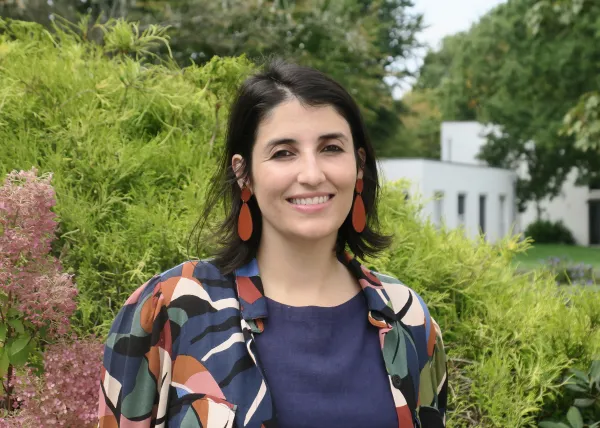
Luísa Reis-Castro is an Assistant Professor of Anthropology at the University of Southern California. She holds a PhD in History, Anthropology, Science, Technology, and Society from the Massachusetts Institute of Technology (MIT). She is broadly interested in the social, cultural, political, and historical dimensions of scientific knowledge about multispecies relations, particularly in contexts involving harm to humans. Her research has been funded by the Wenner-Gren Foundation, the National Science Foundation, and the Social Science Research Council. She has published in Environmental Humanities; Engaging Science, Technology, and Society; Isis; American Anthropologist, among others. Her interdisciplinary research has received awards from the American Anthropological Association, the Latin American Studies Association, the American Sociological Association, and the History of Science Society.
Reis-Castro is currently completing her book manuscript, tentatively titled How to Survive the Mosquito: Vectorial Politics in Brazil and Beyond, which has been selected for the “Atelier: Ethnographic Inquiry in the Twenty-First Century” series at the University of California Press. The book argues that climate change is reshaping disease geographies and the geopolitics of science. It asks: What does it mean to view a planet facing rising rates of mosquito-borne diseases from Brazil’s perspective? By examining the geopolitics of knowledge, racialized imaginaries of Brazilianness, and the mobilization of nature to address planetary challenges, How to Survive the Mosquito shows how novel mosquito projects are both technoscientific interventions and world-making endeavors.
How to Survive the Mosquito Epoch examines the complex interplay of climate change, disease ecologies, and the politics of science. An entomologist explained the importance of Brazil-based research, saying: “When it comes to mosquitoes, the world will become Brazil,” implying that due to the climate change-driven expansion of the mosquito–vector Aedes, other countries would endure the outbreaks currently besetting Brazil. Drawing on interdisciplinary analysis, I will look at Brazilian researchers’ argument that historical and ongoing epidemics in their country give them a special vantage point for offering solutions to the proliferation of mosquito-borne diseases caused by climate change. Beyond contributing to theoretical discussions on the politics of knowledge production and the interconnections between health and the environment, my book will also help to dismantle harmful narratives like those portraying the Global South as a source of disease. To examine these issues, I ethnographically investigated three vector control projects that harness the Aedes to address the pathogens this mosquito can transmit, part of what I call the “reinvention of mosquito science,” after a century of failed anti-mosquito campaigns. By describing technoscientific solutions to help humans coexist with a harmful species that proliferates due to anthropogenic actions, I will make an innovative theoretical contribution to discussions on planetary health.
environmental anthropology; science and technology studies; climate change; disease ecologies; multispecies relations; ethnography; Brazil/Latin America.