
Hanse-Wissenschaftskolleg
Germany

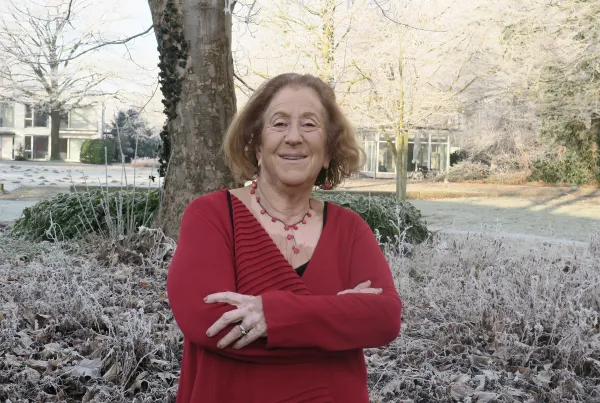
Barbara J. Risman is College of Liberal Arts & Sciences Distinguished Professor Emerita at the University of Illinois at Chicago. Professor Risman recently ended a four-year term as Editor of Gender & Society. Her most recent book is Where the Millennials Will Take Us: A New Generation Wrestles with the Gender Structure (Oxford, 2018). Her current work focuses on empirical and theoretical examination of the growing visibility of non-binary people, their experiences, and how their lives help us understand the gender structure. She has published over two dozen journal articles in venues including American Sociological Review, Gender & Society, and Journal of Marriage and the Family.. She is the 2024 winner of the Council on Contemporary Families Lifetime Achievement. In 2023, she was awarded the Distinguished Lecturer Award from the Southern Sociological Society. The American Sociological Association honored Professor Risman with the 2011 Award for the Public Understanding of Sociology Award. In 2005, Dr. Risman was honored with the Katherine Jocher Belle Boone Award from the Southern Sociological Society for lifetime contributions to the study of gender. She was also named as the 2003 Feminist Lecturer by the Sociologists for Women in Society. Professor Risman has been a Visiting Fellow at SciencesPo in Paris, The Institute for Advanced Studies at Durham University in the UK, and the Center for Advanced Study of Behavioral Sciences at Stanford.
The twenty-first century has brought many changes to gender politics. There is a new and growing restlessness and the apparent emergence of a new paradigm as some, (mostly) young people in the West begin to reject gender categories entirely. In many Western countries now, people can choose a Category X instead of male or female on many official documents, from driver’s licenses to passports. Category X indicates a person does not identify as either a man or a woman. The numbers of people choosing to identify as non-binary is growing. To understand this social change, we must conceptualize gender as a dynamic and changing social structure of inequality that intersects with other systems of inequality. Just as every society has an economic structure, so, too, does every society have a gender structure with both material and cultural aspects. Gender structures are like dominoes; touch one component and it sets off a chain reaction. Professor Risman and her international team of collaborators has been studying these changes since 2020. They have been interviewing people who identify as non-binary in three regions of the United States as well as Italy, Spain, and Australia. By the end of 2023, 240 interviews from the four countries will have been completed and coded for analysis. During her residency, Professor Risman will complete three different papers addressing how similar or different non-binary people’s experiences are cross-nationally.
Gender; non-binary; transphobia; gender structure; cross-national research; social policy