Hanse-Wissenschaftskolleg
Germany
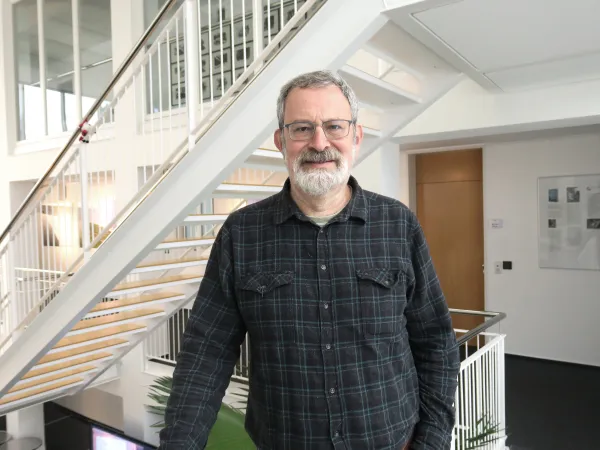
Andreas Teske is a Research professor in the Department of Earth, Marine and Environmental Sciences at the University of North Carolina at Chapel Hill. His expertise focuses on microbial ecology of extreme marine habitats, especially hydrothermal vents and the deep marine biosphere, to which he was introduced at the Woods Hole Oceanographic Institution. After joining UNC Chapel Hill in 2002, Dr. Teske continued to work on the microbial ecology of the sulfur and methane cycle in hydrothermal vents, methane seeps and the deep sedimentary subsurface where he is interested in the natural diversity of the indigenous microbial communities as well as their environmental tolerances and physiological adaptations. He has been working for many years in cold and hot seeps involved in the rapid microbial and abiotic hydrocarbon production and consumption, in the Gulf of Mexico and in Guaymas Basin in the Gulf of California, and has led multiple expeditions with research ship Atlantis and deep-sea submersible Alvin. His current work focuses on deep subsurface drilling across Guaymas Basin where bacteria and archaea cope with distinct temperature and redox gradients that impose strong selective pressures of the subsurface biosphere. Since 2010, Dr. Teske serves as chief specialty editor for Extreme Microbiology in Frontiers of Microbiology
Fossil carbon, including petroleum and gas, drives entire microbial ecosystems that rely on these unusual carbon sources, including the powerful greenhouse gas methane, and that in turn shape the natural cycles of carbon and biomass that is influencing Earth’s climate. Studying the microbial cycling of fossil carbon in its original subsurface context requires an oil- and gas-rich field site where microorganisms thrive at hot temperatures, the hydrothermally active Guaymas Basin in the Gulf of California (Mexico). Whereas my previous expeditions to Guaymas Basin sampled hot hydrothermal vents at the seafloor, my 2019 deep-drilling expedition probed deep sediments and volcanic rocks to 500 meters below the seafloor, towards extremely hot conditions where microbial life becomes extinct and chemical processes take over. Subsequently, I have coordinated hydrothermal and deep biosphere studies on Guaymas Basin with my Hansekolleg partners and several international collaborators. Although the pandemic delayed some projects, we have learned how different kinds of microorganisms are distributed in the subsurface, how they react to increasing temperatures, and how organic matter is transformed by microbes and by non-microbial factors in the Guaymas subsurface. Now is the time to focus on specific connections between subsurface microbes and their environment, and to zoom in on the critical boundaries between biological and non-biological processes that are poorly known
Marine Microbiology, hydrothermal vents, hydrocarbon seeps, deep subsurface, Guaymas Basin