
Hanse-Wissenschaftskolleg
Germany

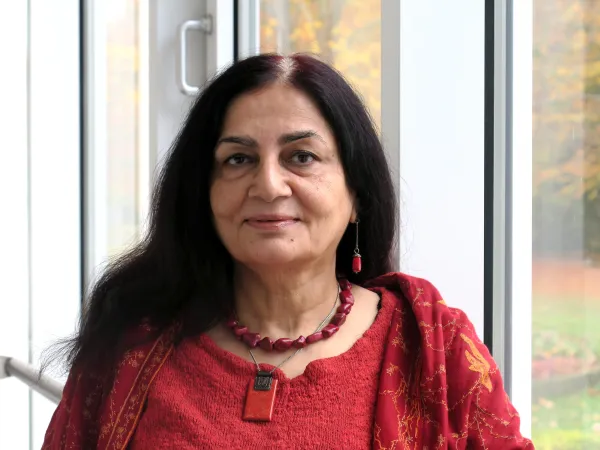
Shirin Zubair is an independent researcher from Pakistan. After earning her PhD from Cardiff University, UK titled: Women’s Literacies in a Rural Pakistani Community: An Ethnographic Study, she completed her postdoctoral project at the University of Texas, US where she researched on Pakistani Muslim women’s uses of literacy in multiple languages, access to higher education, and the subsequent shifts in identity formation. She has held several prestigious fellowships including two Fulbright fellowships to teach and research in the United States; an un-availed research fellowship at Oxford Centre for Islamic Studies , UK as well as senior research positions in Germany, France and Norway. Her work has been published by leading international publishers including John Hopkins, Routledge, Sage as well as American University of Beirut Press and Bielefeld University Press. Her publications are featured in: Feminist Formations; Women's Studies International Forum; Hawwa: Journal of Women in the Middle East and the Islamic World; Journal of South Asian Development; South Asia Research; Discourse Studies.
Currently based at Hanse-Wissenschaftskolleg, Delmenhorst, she is writing a pivot for Cambridge Elements Series on Language, Gender & Sexuality while working on her project titled: Feminist Movements in Pakistan: Discourses, Framing and Contestations, on contemporary feminist movements in Pakistan looking at the role of language and semiotics in constructing and deconstructing the stereotypical discourses of Muslim femininities.
In Pakistan, women have long been confined by the clergy and successive governments to the domain of family. Clergy and governments have controlled their access to education, health, and other public sectors. Since 2018, women from all social strata have been taking to the streets, holding placards, chanting slogans, performing, and addressing the public at rallies. Women use posters, banners, slogans and street theatre to demand their rights and protest against sexual harassment, forced marriages, domestic violence, (marital) rape as well as discriminatory laws. The language of slogans, the visuals, and performances adequately capture the local women’s struggles against the patriarchy, state structures, and dominant narratives in indigenous languages and vernacular expressions to include women from all walks of life and ethnicities. Women who may not be formally educated are mobilized through street theatre in local languages and visual performances. Artists use graffiti and digital art to spread awareness about women’s rights in the informal sector by reaching out to women of all social strata, and rural and urban centres in various ways including outreach classes where posters are displayed and discussed to educate and mobilize women. When activists and participants were interviewed, they said that performing arts engage women very powerfully, thereby sensitizing them informally but also raising awareness about the women’s rights-based manifesto of these marches.
Feminist Theory; Feminist movements; Islamic Feminism; Gender and Islam; Muslim Women; Pakistan; Linguistic landscape; Sociology of Language ; Feminism; Critical Discourse Analysis; Women’s Representations; popular culture